Commercial Septic Systems for Alberta Businesses
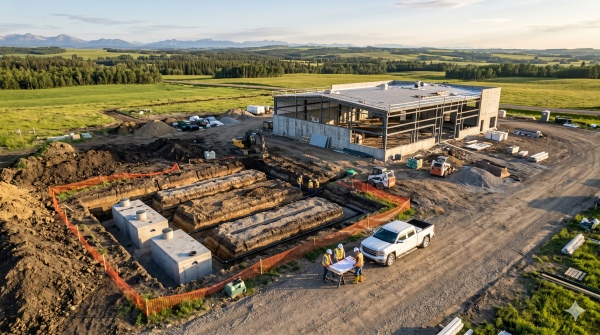
Commercial Septic Systems for Alberta Businesses
Key Takeaways
-
Commercial septic systems process far more wastewater and more complex waste than their residential counterparts, making accurate flow calculations and proper pretreatment necessary to avoid overload and malfunctions. Commercial properties can benefit from monitoring average and peak usage to inform design, maintenance, and upgrades.
-
Waste from restaurants, hotels, factories, and mixed-use buildings typically contains grease, oils, chemicals, and pathogens that can affect treatment bacteria. Many sites require pretreatment or advanced systems like grease traps, filtration, or aerobic units to safeguard the system and the environment.
-
Commercial septic system regulations, such as local bylaws and discharge standards, are more stringent than those for homes and include permits, inspections, and monitoring. Remaining in compliance with these regulations helps prevent fines, shutdowns, and expensive retrofits that affect business operations.
-
Expert design, including site evaluation, accurate system sizes and technology choices, makes a big difference in project cost, construction schedules and operating costs. Spending on design and regular maintenance is an investment that can minimize repairs, increase system longevity and add to property value.
-
Determining the appropriate type of commercial system and dispersal method, whether conventional tanks or advanced treatment and drip distribution, must be based on soil conditions, available land, strength of waste, and future expansion plans. Commercial septic systems businesses can use design checklists and flow tables to match their needs with centralized or decentralized treatment options.
-
Future-proofing a commercial septic system with scalability, sustainable technologies, and smart monitoring helps businesses adapt to growth and changing regulations. Performance reviews, maintenance logs, and training staff on proper use are sensible ways to prevent expensive failures and defend both the site and local water.
Commercial septic systems are on-site wastewater treatment facilities constructed for enterprises, multi-unit residences, and other high-use properties not connected to a municipal sewer line. These systems handle higher waste loads than typical residential systems and typically feature more complex components such as multi-chamber tanks, pumps, and treatment units. Many sites rely on them for offices, restaurants, hotels, schools, and light industrial spaces, where daily water usage can number in the thousands of liters. Design, permit, and maintenance regulations are generally rigorous, as failed systems can contaminate soil and groundwater. To budget, de-risk, and remain compliant, it helps to understand how these systems operate, what they require, and how they integrate with long-term site planning.
Key Commercial Septic System Differences
Commercial septic systems treat far greater flows, more concentrated waste, and stricter regulations than a residential system, so design errors have more serious environmental and financial consequences, particularly in regulated areas such as Alberta.
1. Wastewater Volume
Commercial buildings can generate hundreds or even thousands of gallons of waste water every day, easily outpacing a single home that may only use a few hundred gallons. A standard commercial tank will usually hold between 3,000 and 5,000 gallons and can scale much higher when factoring in staff, customers, and process water.
Peak flows drive design. Morning washroom rushes, lunch service in a restaurant or batch industrial cleaning can send short, sharp spikes through the system. If the tank and drain field aren’t sized for those peaks, solids carry over, treatment drops, and the soil field clogs early.
Engineers often juxtapose estimated daily flows to typical residential figures to demonstrate the difference. One busy restaurant can burden a system more than a number of homes put together. Good design works with average daily flow and maximum hourly or event-based flow based on water-use data, fixture counts, and business type.
2. Waste Composition
Commercial wastewater may contain grease, oils, food solids, cleaners, disinfectants, and even heavy metals or other toxic compounds. This blend is harsher on the native bacteria that digest waste in a normal septic tank.
These facilities frequently require treatment beyond that of a typical septic system in the form of advanced secondary treatment. This can be achieved through aerobic treatment units (ATUs) installed, for instance, below or above ground, or through biofilters or sand filter systems. These units inject oxygen or filter to achieve stricter effluent limits to safeguard local ground water.
In general, there are pretreatment steps that have to be taken. Grease traps, oil separators, equalization tanks, or screens eliminate the most harmful or bulky stuff before it gets to the main tank. Without this, FOG and chemicals can kill beneficial bacteria and reduce treatment efficiency.
3. Usage Patterns
Commercial use is seldom stable. Employee shifts, customer surges, and special events create powerful swings in daily load even when the monthly average appears tame.
Seasonal sites, such as resorts or event venues, can sit quiet for months and then spike over holiday or festival periods. Systems in these environments have to deal with low-flow periods when bacteria populations decline and the sudden high-flow bursts that ensue.
Well designed systems anticipate both average and peak times, with buffer capacity, flow equalization, or staged treatment units. Tracking water meters and flow history over time enables owners to fine-tune upkeep, schedule expansions, and identify abnormal trends in their systems before they cause issues.
4. Regulatory Scrutiny
Commercial systems are governed by different stringent rules in Alberta, such as septic tank effluent and local bylaw frameworks like bylaw no. 1479, which specify design, permits, and discharge standards.
Projects often need groundwater risk reviews, separation distances from wells and water bodies, and specific effluent quality limits before approval. Some sites must install monitoring wells to check for nitrate, pathogens, or other markers in groundwater.
Health and environmental authorities might inspect every 1 to 3 months instead of every few years and can mandate upgrades or shutdown if results exceed limits. Non-compliance can result in fines, operating restrictions or even forced closure until issues are resolved.
5. Financial Stakes
Commercial septic systems usually mean a large up-front cost. Design, bigger tanks, advanced treatment units, chamber or drip distribution systems, and extended drain fields cover much more land than a home system. Cluster or community systems, which service multiple structures, distribute this expense and introduce joint management responsibilities.
System failures can close kitchens, production lines, or entire sites, causing clean-up, repair or replacement, legal claims, and business reputation damage. In a lot of projects, septic design is tied to construction and occupancy permits, so that a design change or approval delay can hold up opening dates. Over time, a properly sized and maintained system can help maintain property value and keep operating costs low, whereas a badly planned system can result in regular pump-outs, fines, and expensive redesigns.
The Commercial Design Process
The commercial design process kicks off way before a single trench is dug. It combines site conditions, projected wastewater flow, local regulations, and industry-specific waste to design a system that functions every day, not just on paper. For most projects, particularly those with flows in excess of approximately 4,700 litres (1,250 gallons) per day, a licensed engineer must lead the design, ensuring code compliance, permits, and public health requirements are met.
Site Evaluation
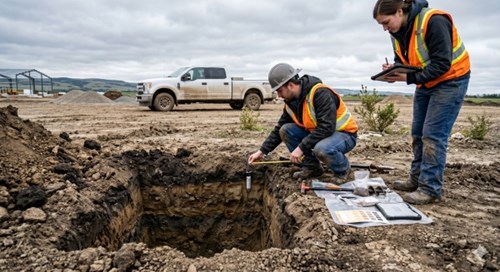
Site evaluation determines if the property is capable of safely accepting and treating wastewater. The designer researches soil type, structure, and percolation to determine how rapidly water flows through the ground and its filtering capacity. Slow, dense clay soils require bigger drain fields or alternative technologies. Coarse sand may require additional treatment to safeguard groundwater.
The team plots lot size, building footprint, parking, access roads, wells, and any streams, lakes, or wetlands that may be nearby. It maps out where you can put a system without risking cross-contamination or obstructing future construction. It aids in respecting mandatory clearance distances from property lines and water bodies.
Groundwater monitoring, via test pits or observation wells, indicates seasonal water table levels. High groundwater or shallow bedrock can eliminate standard leach fields and direct designers to mound systems, sand filters, or drip distribution. Recognizing these boundaries at an early stage prevents failure-prone designs during rainy seasons and minimizes the possibility of expensive redesigns following permit review.
System Sizing
System sizing begins with the occupancy of the building and their water habits. A restaurant where tables turn quickly, a school with bells and period schedules, and a warehouse with a skeleton crew all generate very different daily flows. According to the commercial design process, designers utilize daily users, business type, and peak water use to determine tank volume and drain field area.
Next, they count plumbing fixtures: toilets, urinals, handwash sinks, showers, dishwashers, and process drains. Each fixture is allocated points per hour flow, and they all add up to a design daily flow. That figure connects to sizing tables or charts that correlate flow rates to tank sizes and dispersal field measurements.
Certain applications require special attention. Hotels and apartment buildings have high overnight occupancy laundry loads. Clinics might discharge sanitizers. Light manufacturing might discharge oils or other contaminants. In such instances, designers incorporate grease traps, flow equalization tanks, or pretreatment units. A right-sized system minimizes the risk of being overwhelmed, extends system life, and prevents backups that can shut down a business.
Technology Selection
Technology selection binds all the other steps together. Gravity systems are best suited to sites with good soil, sufficient slope and stable groundwater and tend to be uncomplicated and easier to service. Pressure distribution is more effective on mounded terrain or when designers desire even loading across a smaller drain field. Where room is cramped or leachate force is great, ATUs or other enhanced environmental technologies can lower contaminant levels prior to discharge.
Wastewater type and strength are as important as volume. Cafés and food halls could deliver high-fat waste that requires grease management and strong treatment. Offices tend to have more kitchen-style waste and can employ simpler technologies if the soil permits. On sites with shallow soils, steep slopes, or sensitive aquifers, sand filters, mound systems or subsurface drip fields can distribute treated effluent at low rates and shield water supplies.
Modular and scalable designs are a popular choice for expanding sites, like business parks or resorts that are developed in phases. Employing multiple tanks or treatment units that can be added incrementally over time enables owners to align capacity with actual demand, get ahead of attrition, and prevent a full system swap out. Working with trusted, tested designers minimizes the risk of design mistakes that cause repairs, safety hazards, or extensive downtime and ensures the system will sustain the property for decades.
Types of Commercial Systems
Commercial septic systems fall into two broad groups: centralized systems that send wastewater to a large treatment plant and decentralized systems that treat and disperse wastewater on or near the site. Commercial systems, most businesses outside of the dense urban cores, are best served by decentralized options scaled to their daily flow, soil, and waste type.
Common decentralized commercial system types include:
-
Conventional septic tank with gravel or stone drain field
-
Chamber systems (plastic leaching chambers instead of gravel)
-
Aerobic treatment units (ATUs) with air injection
-
Biofilters and sand filters using passive biofiltration
-
Nitrogen‑reducing systems with aeration or recirculation
-
Evapotranspiration bed systems in arid climates
-
Drip distribution (drip / trickle irrigation) dispersal networks
-
Passive disinfection filters and UV disinfection units
Centralized systems:
-
Serve many properties via sewer networks
-
Rely on a municipal or regional plant
-
Offer consistent high‑level treatment, but need major infrastructure
Decentralized systems:
-
Installed for one site or a cluster of sites
-
Scaled to the enterprise, such as a mini-hotel or workshop.
-
Flexible where sewers are not available or cost‑effective
Pros:
-
Tailored to soil, space, and wastewater load
-
Can reach advanced effluent quality for sensitive areas
Cons:
-
Higher design responsibility for the owner
-
Ongoing maintenance is critical; neglect leads to failure
|
System type |
Key features |
Maintenance level |
Best suited for |
|---|---|---|---|
|
Conventional + gravel |
Simple tank + stone drain field |
Low–medium |
Good soils, steady flow, standard toilet waste |
|
Chamber |
Plastic chambers, no gravel |
Low–medium |
Sites with delivery limits or space constraints |
|
ATU / nitrogen‑reducing |
Aeration, higher bacteria activity |
Medium–high |
Food service, hotels, high organic / N loads |
|
Biofilter / sand filter |
Passive media treatment |
Medium |
Tight sites needing better effluent quality |
|
Drip distribution |
Low‑rate subsurface piping |
Medium |
Shallow soils, slopes, landscaping areas |
|
UV / passive disinfection |
Final polishing step, kills pathogens |
Medium |
Near wells, surface water, or public access |
|
Evapotranspiration beds |
Shallow beds, high evaporation and uptake |
Medium |
Dry climates with limited soil percolation |
Conventional Systems
Standard commercial systems employ a submerged septic tank that settles solids and scum and then discharges clarified effluent to a gravel or stone drain field. The drain field is in trenches or a bed where perforated pipes disseminate the flow through clean aggregate, and the soil below completes treatment as microbes degrade residual contaminants.
These systems are most suitable where daily wastewater flow is moderate and relatively consistent, for example in small offices, low-volume retail or warehouse staff facilities. They’re not well adapted for high-strength waste from restaurants, food processing or laundries, where grease, oils and cleaning agents can plug the drain field or disrupt tank biology. Poorly drained or very shallow soils restrict their use as the soil requires sufficient depth and oxygen to properly treat effluent.
Regular upkeep is elementary but mandatory. Tanks generally require sludge and scum pumping every 2 to 5 years, depending on flow and waste strength. Inspections should check baffles, inlet and outlet tees, and any effluent filter to minimize solids reaching the drain field. Where soil tests demonstrate good permeability and groundwater is well below the trench base, conventional and chamber systems still represent economical choices for numerous commercial locations.
Advanced Treatment
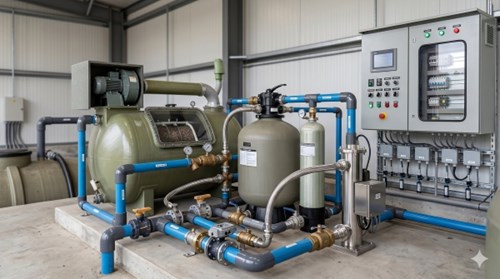
Advanced treatment systems increase effluent quality when regulations or the local environment require, such as near potable wells, lakes, or protected wetlands. About commercial systems, they are typically based around a septic or primary tank, then one or more treatment stages prior to dispersal.
These are Aerobic treatment units (or ATUs) that pump air into the wastewater, which allows beneficial microbes to degrade solids more quickly and thoroughly. Nitrogen‑reducing systems employ similar types of aeration or recirculation through different zones to strip out nitrates and other nitrogen compounds, a problem that’s key where groundwater nitrate is already high. Biofilters and sand filters rely on passive biofiltration. Effluent trickles through sand or engineered media that host dense microbial growth, trimming biochemical oxygen demand (BOD), suspended solids, and nutrients.
Most large, more sophisticated systems have pump chambers to dose effluent under pressure, effluent filters to trap fine solids, and even constructed wetland cells that simulate natural marshes for additional polishing. For final disinfection, UV systems employ UV light to inactivate bacteria, viruses, and other microorganisms without adding chemicals, and a few sites layer on passive disinfection filters as a backup.
All of these methods generate cleaner, lower-pathogen effluent that safeguards wells, streams, and shorelines. In many sensitive areas, regulators now mandate ATUs, biofilters, or UV units for new commercial developments or for retrofits when older systems give out. The trade-off is increased equipment cost, increased moving parts and a requirement for periodic servicing by trained technicians.
Dispersal Methods
Dispersal deals with how treated wastewater exits the system and returns to the environment. When you don’t have a lot of space but your soils can still handle it, a bed subsurface wastewater infiltration system disperses effluent over a larger area than trenches, which are generally narrower and deeper. Chamber systems substitute gravel with interlocking plastic units that provide open storage and infiltration voids and come in handy where gravel is expensive, access is tight or installers want to reduce construction time.
Drip distribution systems, known as drip irrigation or trickle irrigation systems, utilize small-diameter tubing with emitters to distribute effluent at a controlled low rate across a shallow network, typically 150–300 mm below ground. This approach pairs nicely with sloped topography, landscaped areas, and locations with shallow soils over bedrock since dosing is controlled and low-rate. Evapotranspiration bed systems retain effluent in shallow lined beds where water exits primarily via evaporation and plant uptake, rendering them niche solutions limited to dry climates with intense sun, wind, and minimal precipitation.
Selecting a dispersal method begins with soil permeability, groundwater depth and lot size. Coarse, fast-draining soils typically require longer dispersal areas or lower loading rates to reduce the risk of pollutants reaching groundwater too rapidly. Tight or slowly draining soils may nudge the design toward wider beds, drip distribution, or even raised mounds that reside above natural grade. Impermeable liners and mounded systems serve to keep effluent separated from saturated layers when groundwater or bedrock lies near the surface, but still provide soil microbes with sufficient oxygen.
A properly paired dispersal system will distribute effluent at a rate the soil can absorb, prevent surfacing or ponding, and minimize the chances that nutrients and pathogens contaminate wells or adjacent streams. With careful soil testing and hydraulic design, businesses can match advanced treatment units, biofilters, or conventional tanks with the appropriate dispersal layout to maintain system performance and environmental impacts in harmony.
Financial and Property Implications
Commercial septic decisions influence overall project budget, schedule, and long-term asset value. Design, sizing, and technology level influence not just what you pay in advance, but how stable your operating costs remain and how buyers respond to the property years later.
Project Costs
First system costs typically begin in the ballpark of CAD 20,000 to 81,000 or more for commercial sites, depending on flow, soil, and layout. Key cost factors are engineering design, soil and percolation tests, permits and environmental approvals, excavation and site preparation, tanks and treatment units, drain field materials, and installation labor. Larger flows, food service uses, or multi-building sites will generally push you toward the high end of that scale.
Hard soil and ground water contribute additional costs. Clay, shallow bedrock, or high water table sites typically require beds raised above the soil surface, pressure dosing or advanced treatment units, costing several thousand dollars more than a standard gravity system. Where regulators request greater treatment performance, they may impose additional costs for pumps, control panels, alarms, monitoring ports, and sampling points. Features can extend the construction timeline with additional inspections and commissioning.
In addition to that, you need to account for regular maintenance. Inspections and pumping every 3 to 5 years often cost around CAD 405 to 675 per visit for smaller systems, climbing to CAD 405 to 810 per visit for larger tanks. Environmental compliance, including sampling, lab tests, and reporting, can add around CAD 405 to 675 annually on many commercial properties.
|
Cost item |
Small office |
Restaurant |
Multi‑unit retail |
|---|---|---|---|
|
Design & engineering |
CAD 2,700 |
CAD 5,400 |
CAD 8,100 |
|
Permits & approvals |
CAD 800 |
CAD 1,200 |
CAD 1,500 |
|
Tanks & treatment units |
CAD 5,000 |
CAD 12,000 |
CAD 20,000 |
|
Drainfield & media |
CAD 4,000 |
CAD 8,000 |
CAD 12,000 |
|
Extra cost (poor soils/tech) |
CAD 1,000 |
CAD 5,000 |
CAD 8,000 |
Operational Expenses
Annual operating costs include inspections, sludge removal, and small tune-ups. For a lot of commercial systems, pumping and cleaning is in the range of CAD 405 to 810 per visit, depending on tank volume and access, with inspection fees added over the year.
Repairs differ a great deal. A small leak, baffle, or pump problem might remain in the low few hundred dollar range, but work on tanks or drainfields can easily run into the several thousand category. Ignoring simple care can result in repairs or early replacement in the CAD 675 to 2,700 bracket, and a full system swap-out can be CAD 13,500 to 54,000 on many properties.
Traditional gravity systems tend to have lower operating costs but can be more susceptible to failure on difficult sites. Advanced treatment units require more service visits and parts, but they frequently reduce sludge volume and safeguard the drainfield. This can potentially extend system life and reduce major-ticket repairs.
Smart design and efficient fixtures count. Low-flow toilets and faucets reduce hydraulic load, so the system goes longer between pump-outs. Good maintenance records aid compliance and help you avoid environmental fines that can top CAD 1,350 per violation.
Property Value
Septic quality is linked directly to commercial property value. A properly sized, documented, and code-compliant system provides lenders, buyers, and tenants more assurance in the site and its capacity to support current and future use.
Old, undersized, or failing systems often have the contrary effect, and there’s nothing a seller fears quite like surfacing effluent, odor, or frequent backups that can reduce sale price, stall closings, or send risk-averse buyers running. In certain markets, buyers will require a greater price reduction than the cost of repair as they need padding against unforeseen future surprises.
Good documentation—design drawings, permits, pumping logs, inspection reports, lab results—assists during due diligence. They indicate that maintenance every 3 to 5 years has been conducted, pumping costs of about CAD 405 to 675 per visit have been managed, and environmental testing and fees typically amount to CAD 405 to 675 per year and are current.
Financial and property implications: Upgrades might be required for newer discharge rules or more intensive site use. This work contributes to capital costs and decreases the likelihood of fines over CAD 1,350 per violation, while minimizing the risk of unscheduled shutdowns that can damage business reputation and revenue.
Future-Proofing Your System
To future-proof a commercial septic system is to plan for growth, tighter rules and new technology while keeping long-term costs under control. It means treating routine maintenance as design, not an afterthought.
Scalability
Commercial systems should easily handle today’s load and have room to grow. That begins with modular tanks and drain fields that can be added to in stages. For instance, you could install a primary tank and one drain field at the moment, but have room, valves, and stub-outs left for a second tank or additional dispersal lines when you build out more units, employees, or clients.
Pumps, blowers, distribution boxes, control panels—all the key components need to be sized so you can swap for higher-capacity units without tearing up the entire site. Engineers typically design flows assuming a certain number of daily users, the amount of wastewater per user, soil type, and slope of the site. They then include safety factors for new tenants, extended hours, or process water from kitchens or small manufacturing lines.
Things will change in your operations and your system needs to keep up. A warehouse turned food court or office building equipped with showers and a cafeteria is very different in waste strength and volume to send to the tanks. Regular inspections and performance reviews help you catch those shifts early, so you can add treatment stages or expand the field before there is a failure, not after.
A simple scalability checklist can guide upgrades:
-
Current and projected user count and daily wastewater volume
-
Land set aside and available for additional tanks or drain field areas.
-
Access for equipment to add or replace components
-
Flexibility in pipe routing, manifolds, and control panels
-
Budget and schedule for staged expansion over 5–20 years
Sustainability
Sustainable systems reduce water and energy consumption and reduce pollutant loads. Low-flow toilets and faucets, water-efficient commercial dishwashers, and training staff to avoid unnecessary water use can all sharply reduce flows. This both helps the drain field last longer and keeps pumping energy lower.
On the treatment side, advanced units for phosphorus, pathogens, and chemicals are valuable for high-volume sites or where discharge limits are tight. For instance, a hotel close to a lake might have an advanced treatment unit that removes nutrients prior to effluent reaching the soil. This provides an additional layer of defense for local groundwater and surface water.
Other sites incorporate green treatment stages like constructed wetland cells, sand filters, or vegetated filter strips. These use natural processes to polish the effluent and thereby can help support compliance where standards are tight. Groundwater monitoring, employing observation wells and periodic lab tests, verifies that the system continues to do its job over time and facilitates early correction should any trend drift the wrong way.
Forward-looking-keeping is what pulls all of this together. Scheduled pump-outs, pump and control inspection, and prompt repair of minor issues keep your system efficient and long-lived, which is almost always more cost-effective than emergency repairs.
Technology Integration
Technology figures into future-proofing more and more. Intelligent monitoring systems with level sensors, flow meters, and alarms can monitor tank levels, pump cycles, and critical treatment data in real time. Remote alerts for high water or power loss or odd flow patterns provide you with time to act before backups or overflows.
Numerous commercial installations currently record information on flow, effluent quality and power consumption. This documentation aids in demonstrating continued compliance in jurisdictions with stringent discharge requirements, like Canadian provinces such as Alberta, where regulations can become more restrictive and vary from one local authority to another. It enables proactive maintenance since smart sensors can alert to slow pump performance or increasing solids that indicate required service.
Future proofing means being informed. Standards, codes, and treatment options change, sometimes more quickly than anticipated. Checking local codes and manufacturer updates every few years and integrating that check into your maintenance plan helps keep the system aligned with both legal requirements and real-world loading.
Avoiding Costly Business Pitfalls
Commercial septic issues almost never start big. They tend to fester out of little scheduling holes, missed inspections, or ambiguous responsibilities. For an operation that serves more than 20 folks a day, particularly those with LCSS, these cracks can close doors, incur fines, and taint local water.
Underestimating Needs
Sizing a system based only on “average daily flow” is one of the most common errors. Wastewater doesn’t come in a nice smooth line over 24 hours. It spikes at shift start, meal breaks, events, and changeovers. A restaurant, hotel, clinic, or school can see flows many times higher than the daily average in their peak hours, and the system must be able to manage those peaks without backing up.
Future changes are just as important as today’s use. A tiny café that adds outdoor seating or a warehouse that adds more staff and showers can push a system over its design limit in a year or two. Expansion, extended hours, or additional services like cooking or laundry all increase wastewater volume and alter its composition.
All sources should be mapped and counted: toilets, sinks, kitchens, dishwashers, floor drains, production lines, labs, and seasonal surges, such as tourism peaks or holiday events. For LCSS, the soil absorption field must correspond to this total load, or the soil will prematurely clog and fail.
Capacity planning ain’t one and done. A technician should review loading and system performance every couple of years or following any significant change in personnel, floor plan, or offerings.
Ignoring Regulations
Not following local rules generally ends up being more expensive than well-designed and cared-for systems. Companies face fines, forced shutdowns, and costly retrofits if systems fall below health, building, and environmental standards.
For Alberta, that means proper permits, design review and inspections, plus strict adherence to septic tank effluent regulation bylaw no. 1479. That bylaw sets standards for treated wastewater discharge, particularly for LCSS that may impact groundwater and underground drinking water sources (USDWs).
Neat, up-to-date records assist in audits and conflicts. Maintain a file containing copies of permits, inspection reports, pumping tickets, design plans, and any system or site modifications.
Key regulatory checkpoints for Alberta commercial systems include:
-
Verified design by a qualified professional
-
Approved permits before construction or upgrades
-
Compliance with bylaw no.1479 effluent standards
-
Scheduled regulatory inspections and prompt correction of any issues
-
Documented maintenance, pumping, and repairs kept on file
Neglecting Maintenance
Routine maintenance lies at the heart of risk management. Commercial septic systems require regular inspections, cleaning, and pumping to eliminate solids before they accumulate, reach the outlet, and clog downstream components of the system.
When maintenance slackens, solids migrate into pipes and drain field. That causes clogs and pooling on the surface and, in the worst cases, complete drain field failure. For LCSS, a failed soil absorption area can discharge raw or partially treated waste into the soil, increasing the potential for contamination of USDWs and adjacent wells.
Most commercial systems require a complete pump-out roughly once annually, but heavy-use locations might require it more frequently. Septic pumping is not a simple housekeeping task. It requires special trucks, special training and safe handling, or the employees and the location are in danger of health and safety issues and damage to tanks and pipes.
A simple maintenance plan helps:
-
Make an annual or more frequent inspection and pumping appointment with a reputable service provider.
-
Maintain a record of dates, findings, and any repairs. Go over it every year.
-
Educate employees on what not to flush or drain, such as wipes, grease, and solvents.
-
Teach warning signs: slow drains, odors, wet patches, or gurgling sounds and who to call first.
Conclusion
A well-designed commercial septic plan goes beyond code compliance. It maintains operations, safeguards visitors and employees, and preserves the property for the future. A good design, appropriate sizing, and consistent maintenance prevent costly repairs and disastrous downtime.
Picture a bustling coffee shop, a boutique hotel, or a light manufacturing site. Each requires a system designed for actual usage, local soil, and expansion plans, not a guess on paper.
For next steps, discuss with a local licensed pro, grab old water use bills and walk the site. Inquire, receive written alternatives and select the plan that works with your budget and business objectives.
Frequently Asked Questions
What makes a commercial septic system different from a residential system?
Commercial systems deal with higher, more variable wastewater flows and frequently more complex waste. They require bigger tanks, advanced treatment units, and stricter design standards. Local codes are normally more stringent, with inspections, monitoring, and maintenance occurring much more frequently than for residential systems.
How is a commercial septic system designed for my business type?
Design starts with a professional site evaluation and wastewater flow estimate based on your business use. Engineers then size the tank, treatment units, and drain field to match peak flows and local soil. They ensure compliance with health and environmental regulations.
What types of commercial septic systems are commonly used?
Typical commercial systems are conventional septic with drain fields, aerobic, mound, and advanced treatment systems with filters and media. Which one is right depends on soil conditions, available space, daily flow, and local codes. A licensed designer or engineer should suggest the optimal choice.
How does a commercial septic system affect property value?
A beautiful, permitted, documented system protects and even adds value. It demonstrates regulatory compliance and reduces the risk of failures and shutdowns. Badly engineered or on-the-ropes equations have the potential to lower asset worth and cause costly fixes or near-term substitution obligations.
What are the main long-term costs of a commercial septic system?
Longer term, you’ll have to pay for regular pumping, inspections, repairs, electricity for pumps or treatment units, and maybe even upgrades to comply with new regulations. Putting your money into good design and maintenance up front almost always cuts down on emergency repairs, downtime, and costly system replacements down the line.
How can I future-proof a new commercial septic system?
Think business growth, not just usage. Design for potential higher flows, new fixtures, or additional structures. Opt for modular or upgradable treatment units and reserve space for growth. Ensure the design can adjust to probable regulatory and environmental shifts.
What business risks come from a poorly managed commercial septic system?
Shutdowns, health code violations, fines, environmental damage, property damage, lost customer trust. Untreated wastewater problems may initiate expensive lawsuits. Periodic inspection, maintenance, and record keeping go a long way toward mitigating these operational and financial risks.
Ready to learn more about wastewater management solutions? Explore our resources:
Septic System Installation & Maintenance
Other helpful contents:
Alberta's Wastewater and Stormwater Management